Why Global Uncertainty Makes Indonesia’s Yacht Industry Stronger Than Ever
In a world where trade wars, airspace disruptions, and geopolitical tensions are reshaping how people travel, one truth is emerging with remarkable clarity: Indonesia’s waters have never been more desirable. For discerning travellers from Europe and the Asia-Pacific who are rethinking their next luxury escape, booking a Komodo shared yacht cabin is not simply a holiday choice; it is an act of turning global uncertainty into personal adventure. When the world feels unpredictable, the archipelago’s pristine seas, Komodo dragons, and manta-filled currents offer something that no tariff can diminish: pure, untouchable beauty.
The World in Flux — and What It Means for Your Next Holiday
Since 2025, the global travel landscape has been reshaped by forces that few could have anticipated. The United States imposed sweeping reciprocal tariffs on dozens of nations. Indonesia raised its rate to 19%, sending emerging-market currencies into a volatile period and prompting policymakers across Southeast Asia to scramble for alternatives. Geopolitical flashpoints in the Middle East led to widespread airspace closures, disrupting European flight paths to Asia. Between late February and early March 2026, Bali’s I Gusti Ngurah Rai International Airport alone recorded 64 cancelled international flights.
For tourism, however, these disruptions have had a paradoxical effect. Rather than suppressing demand, they have concentrated it. Travellers who are rethinking long-haul trips to conflict-adjacent regions are redirecting their aspirations and their budgets toward destinations that feel both safe and spectacular. Indonesia fits that description perfectly.
Indonesia’s Tourism Minister, Widiyanti Putri Wardhana, was explicit: “Tourism is a form of service export that is not affected by trade tariff policies. By attracting more foreign tourists, we can maintain the stability of the Rupiah and foreign exchange reserves.” The Ministry has doubled down on quality tourism, with fewer visitors who spend more, stay longer, and connect more meaningfully. Yacht travel, by its very nature, embodies this philosophy.
Indonesia’s Tourism Industry: Resilient by Design
Despite the noise of global uncertainty, Indonesia’s tourism sector is performing with remarkable resilience. By November 2025, Indonesia had welcomed nearly 14 million international visitors, on pace to meet its annual target of 15–16 million. Tourism’s contribution to GDP had climbed close to 5% by the end of the third quarter of 2025, and projections for 2026 suggest tourism receipts could reach USD 22–24.7 billion.
The government’s Indonesia Tourism Outlook 2025/2026, developed with Bank Indonesia and the national planning agency Bappenas, frames quality over quantity as the defining principle of this era. Marine tourism sits at the very top of the Ministry’s strategic pillars, and nowhere does Indonesia deliver more spectacularly on that front than in Komodo and Raja Ampat.
Labuan Bajo, the gateway to Komodo National Park, has seen significant infrastructural investment. Hotel supply in the region is growing by 19% between 2025 and 2027, with upscale and luxury segments accounting for more than 70% of the total supply, a clear signal that the destination is being positioned for high-value travellers. From April 2026, a hard daily cap of 1,000 visitors applies across the entire national park, with all visits pre-booked via the official SiOra app. This makes advance planning and choosing an operator who manages access on your behalf more important than ever.
The Yacht Industry: Indonesia’s Golden Opportunity
For Indonesia’s luxury yacht industry, the current global climate is not a headwind; it is a tailwind.
Here is why: when exporters lose revenue to tariffs, service industries gain. When traditional tourism hubs face disruption, alternative destinations flourish. When travellers grow weary of crowds, overtourism, and cookie-cutter itineraries, the idea of sailing privately through the Banda Sea or anchoring off a deserted pink beach in Komodo becomes irresistible.
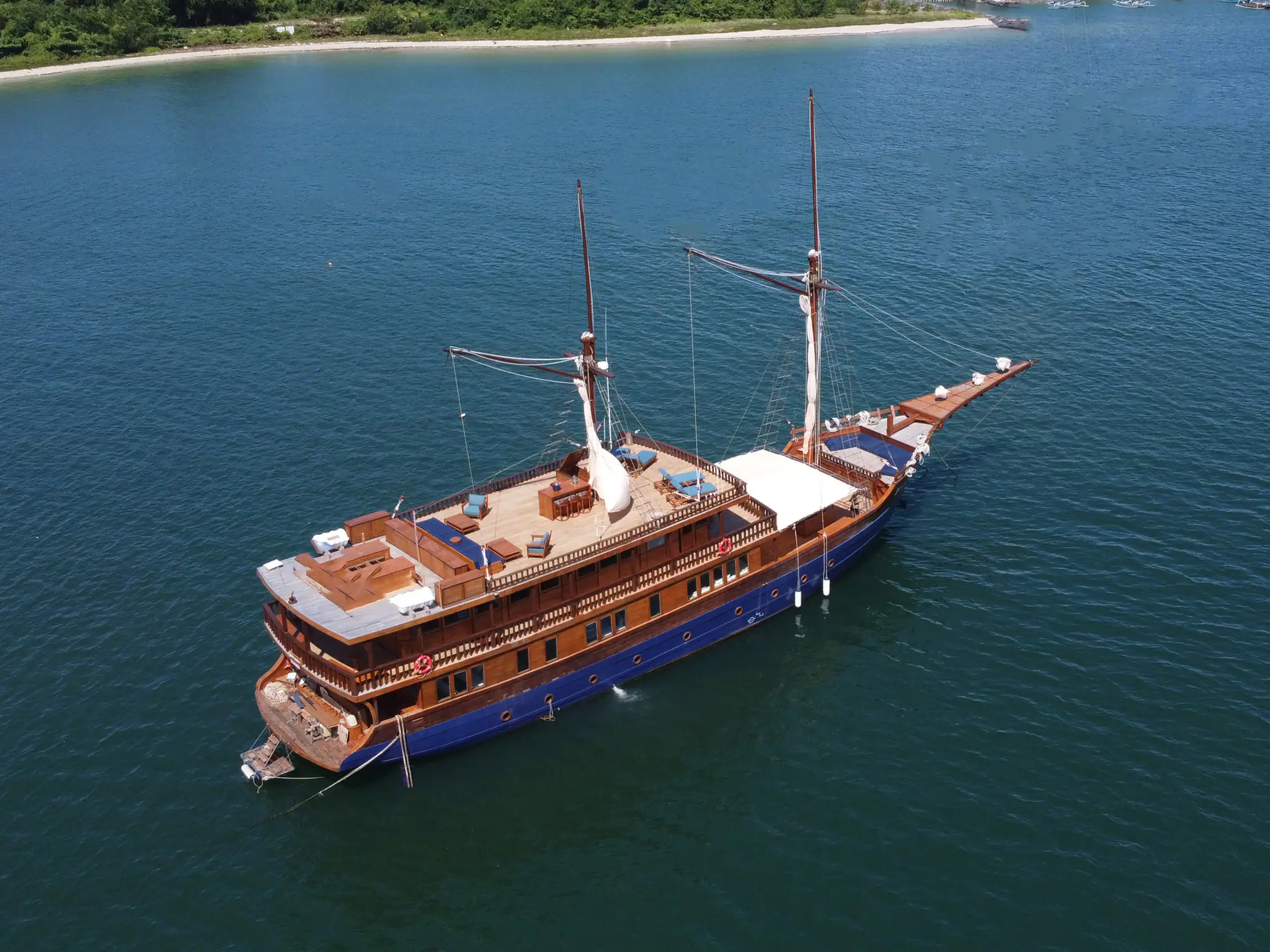
A Komodo shared yacht cabin with The Yacht Club Indonesia allows travellers to experience all of this at a price point that makes the dream genuinely accessible. Rather than chartering an entire vessel, which can cost several thousand dollars per night, shared voyage guests book individual cabins aboard some of Indonesia’s finest luxury liveaboards, sailing itineraries that span Komodo’s dragon-inhabited shores, kaleidoscopic dive sites, and remote beaches that see no other human footfall.
The concept is perfectly timed. As Indonesia’s Ministry of Tourism pushes operators to prioritise quality spending and longer stays, the shared voyage model delivers both. Guests typically sail for five to ten nights, spend meaningfully on curated experiences, and return home having discovered a side of Indonesia that most travellers will never see.
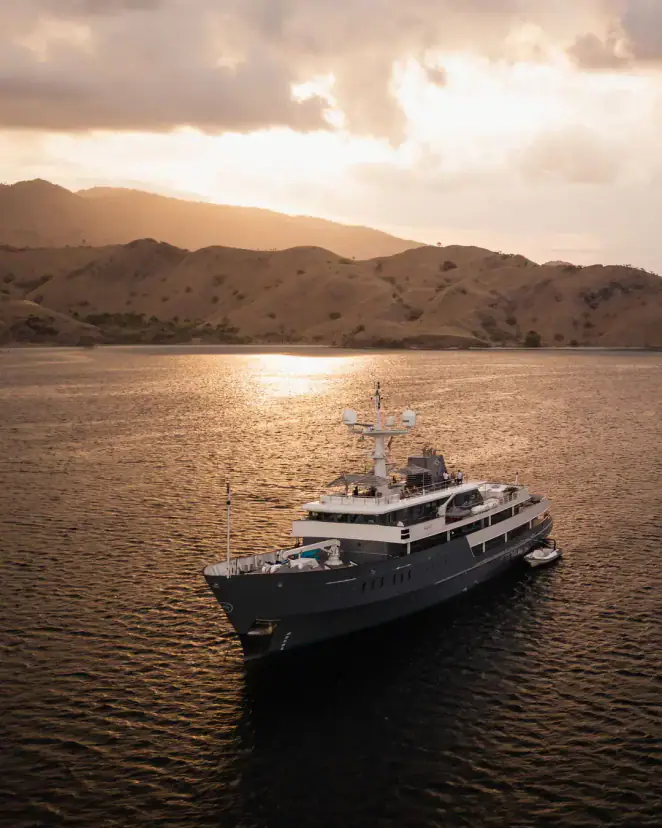
For those who want the full privacy of an exclusive charter, a private yacht experience in Indonesia remains The Yacht Club Indonesia’s flagship offering, with vessels ranging from intimate 30-metre schooners to 60-metre expedition yachts capable of carrying 30 guests in absolute luxury.
Komodo National Park: Why Demand Is Only Going Up
Komodo National Park is a UNESCO World Heritage Site encompassing more than 1,700 square kilometres of marine and terrestrial habitat. It is the only place on earth where Komodo dragons roam freely in their natural environment. Its dive sites, Manta Alley, Crystal Rock, and Batu Bolong, are consistently rated among the world’s finest, with visibility that can exceed 30 metres and currents that attract schooling hammerheads, pygmy seahorses, and Oceanic manta rays in extraordinary numbers.
Under the new 2026 visitor quota system, access to Komodo is now genuinely restricted. Independent travellers who arrive without a pre-booked itinerary may find it difficult to obtain park entry, especially during peak season from June to August. This is precisely why booking a Komodo shared yacht cabin through a licensed operator like The Yacht Club Indonesia, which manages all park permits, entry fees, and anchoring permissions, is not just convenient but essential.
The alternative, attempting to piece together Komodo access independently, risks arriving at the park gate to find daily visitor slots already exhausted.
Raja Ampat: The World’s Most Biodiverse Waters
If Komodo is Indonesia’s most iconic marine destination, Raja Ampat is its most extraordinary. Located at the heart of the Coral Triangle in West Papua, Raja Ampat hosts more marine species per square kilometre than anywhere else on the planet. Scientists have recorded more than 1,400 species of reef fish and 600 species of coral, numbers that dwarf those of any other marine ecosystem on Earth.
A private yacht Raja Ampat charter is one of the world’s truly transformative travel experiences. The remoteness of the archipelago reached via Sorong, itself connected through Jakarta or Makassar, means that only a small number of vessels navigate these waters at any given time. Sunrise over the karst limestone islands of Wayag, snorkelling with wobbegong sharks in Passage Pianemo, or drifting through the jellyfish lake of Kakaban: these are experiences that belong to those willing to journey to the edge of the world.
The Yacht Club Indonesia operates private yacht Raja Ampat itineraries aboard vessels equipped for extended passages, expert local guides, and all diving and snorkelling equipment. Guests typically combine Raja Ampat with Komodo or Banda Sea extensions for a comprehensive Indonesian odyssey.
Komodo Private Yacht: The Case for Going Exclusive
For families, groups of friends, or corporate retreats, a Komodo private yacht charter transforms the entire experience. When you charter a vessel exclusively, the itinerary bends entirely to your wishes. Want to linger two extra days at Manta Alley because the mantas are extraordinary? Done. Prefer a private beach barbecue on a deserted island rather than the scheduled dive? Simply ask.
The Yacht Club Indonesia’s fleet includes vessels across every tier of the luxury spectrum from the intimate 30-metre Rascal and Rebel, each accommodating 10 guests across 5 cabins, to the extraordinary 60-metre Aqua Blu with 15 cabins for 30 guests. Pricing for a komodo private yacht typically starts from around USD 2,500 per cabin per night, with full-vessel charters from USD 20,000 per night depending on vessel size and season.
For groups who want the togetherness of shared exploration but the exclusivity of private access, The Yacht Club Indonesia also offers Tandem Charter, booking two vessels that cruise together, combining the camaraderie of a larger group with the intimacy of smaller vessels.
How to Get to Labuan Bajo: Airline Guide for European & APAC Travellers
From Europe
European travellers will connect through one of Asia’s major hub airports — Singapore (Changi), Kuala Lumpur (KUL), or Jakarta (CGK) — before taking a domestic or regional connection to Labuan Bajo (LBJ).
Recommended routing from Europe:
| Departure City | Recommended Route | Airlines | Approx. Total Travel Time |
|---|---|---|---|
| London (LHR) | London → Singapore → Bali → Labuan Bajo | Singapore Airlines + Batik Air/AirAsia | 20–22 hours |
| Amsterdam (AMS) | Amsterdam → Singapore → Bali → Labuan Bajo | KLM + Garuda/Batik Air | 20–22 hours |
| Frankfurt (FRA) | Frankfurt → Singapore → Labuan Bajo | Lufthansa/Singapore Airlines + Scoot | 19–21 hours |
| Paris (CDG) | Paris → Kuala Lumpur → Labuan Bajo | Air France/Malaysia Airlines + AirAsia | 20–22 hours |
| Zurich (ZRH) | Zurich → Singapore → Bali → Labuan Bajo | Swiss + Scoot or Batik Air | 21–23 hours |
Key note for European travellers: Scoot (Singapore Airlines’ budget subsidiary) launched twice-weekly direct flights from Singapore to Labuan Bajo between late 2025 and early 2026, operating on Thursdays and Sundays. This is a particularly efficient connection after a direct Singapore Airlines flight from European hubs, allowing a same-day or next-morning connection.
For travellers routing via Bali, AirAsia and Batik Air each operate multiple daily direct flights from Denpasar (DPS) to Labuan Bajo (LBJ), with a flight duration of approximately 1 hour 20 minutes. Garuda Indonesia also offers a direct Bali–Labuan Bajo service. During peak season (June–August), these routes sell out weeks in advance book early.
From the Asia-Pacific Region
APAC travellers have direct or near-direct routing options that significantly reduce journey time.
| Departure City | Route | Airlines | Approx. Travel Time |
|---|---|---|---|
| Singapore (SIN) | Singapore → Labuan Bajo (direct) | Scoot (Thu & Sun) | ~3h 30min |
| Kuala Lumpur (KUL) | KUL → Labuan Bajo (direct) | AirAsia (Thu & Sat) | ~3h 40min |
| Bali/Denpasar (DPS) | Bali → Labuan Bajo (direct) | AirAsia, Batik Air, Garuda Indonesia | ~1h 20min |
| Jakarta (CGK) | Jakarta → Labuan Bajo (direct) | Garuda, Batik Air, Citilink, AirAsia, Super Air Jet | ~2h 30–3h |
| Sydney (SYD) | Sydney → Bali → Labuan Bajo | Qantas/Virgin + Batik Air/AirAsia | ~9–11 hours |
| Tokyo (NRT/HND) | Tokyo → Jakarta/Bali → Labuan Bajo | Garuda Indonesia + domestic connection | ~11–13 hours |
| Seoul (ICN) | Seoul → Bali → Labuan Bajo | Korean Air/Garuda + domestic | ~9–11 hours |
| Hong Kong (HKG) | Hong Kong → Bali → Labuan Bajo | Cathay + AirAsia/Batik | ~8–10 hours |
Practical tips for all travellers:
- Always arrive in Labuan Bajo at least one night before your yacht departure. Boat schedules are non-negotiable, and flight delays do occur.
- Book morning flights from Bali to Labuan Bajo to maximise your first day aboard.
- During the peak June–August season, domestic connections to LBJ sell out weeks in advance. Secure your full routing when booking your yacht.
- From April 2026, all Komodo National Park access must be pre-booked via the SiOra app — your operator will handle this, but confirm in advance.
Why Book with The Yacht Club Indonesia
The Yacht Club Indonesia is one of the archipelago’s most respected luxury yacht charter operators, offering a curated fleet of vessels across Komodo, Raja Ampat, Bali, and beyond. With an affiliation with FurtherEast, one of Asia’s foremost luxury travel networks, the company brings genuine expertise to every enquiry.
Their five-step booking process Consultation, Selection, Quotation, Booking, Experience—ensures that every aspect of the voyage, from itinerary design to park permits, is handled by specialists who intimately understand Indonesian waters.
Whether you are seeking the sociability of a Komodo shared yacht cabin, the exclusivity of a private charter, or the unique experience of a tandem charter for a large group, The Yacht Club Indonesia has a vessel and an itinerary to match your vision.
Frequently Asked Questions (FAQ)
A Komodo shared yacht cabin lets guests book one or more cabins on a scheduled luxury liveaboard, enjoying premium service, meals, dives, and excursions at a lower cost than a private charter.
Indonesia is safe, stable, and welcoming. Tourism drives economic resilience through investments in infrastructure, safety, and services. Remote Komodo and Raja Ampat remain pristine, while visitor numbers from Europe, Australia, and Asia continue to increase.
May to October is best for sailing in Komodo, with calm seas and top visibility. Manta rays peak from March to November. July–August is the busiest and best time for dragon trekking—book yachts and flights months ahead.
Fly from Europe to Singapore, then take Scoot’s direct Labuan Bajo flight on Thursdays or Sundays. Or connect via Bali and continue by domestic flight. Total travel time is usually 20–23 hours.rs, including connections.
From April 2026, Komodo National Park capped daily visits at 1,000. Entry now requires pre-booking via SiOra. Licensed operators like The Yacht Club Indonesia secure permits early, making established operators the safest booking choice.